
On Aftersun
Remembering the best film of the last twenty years.

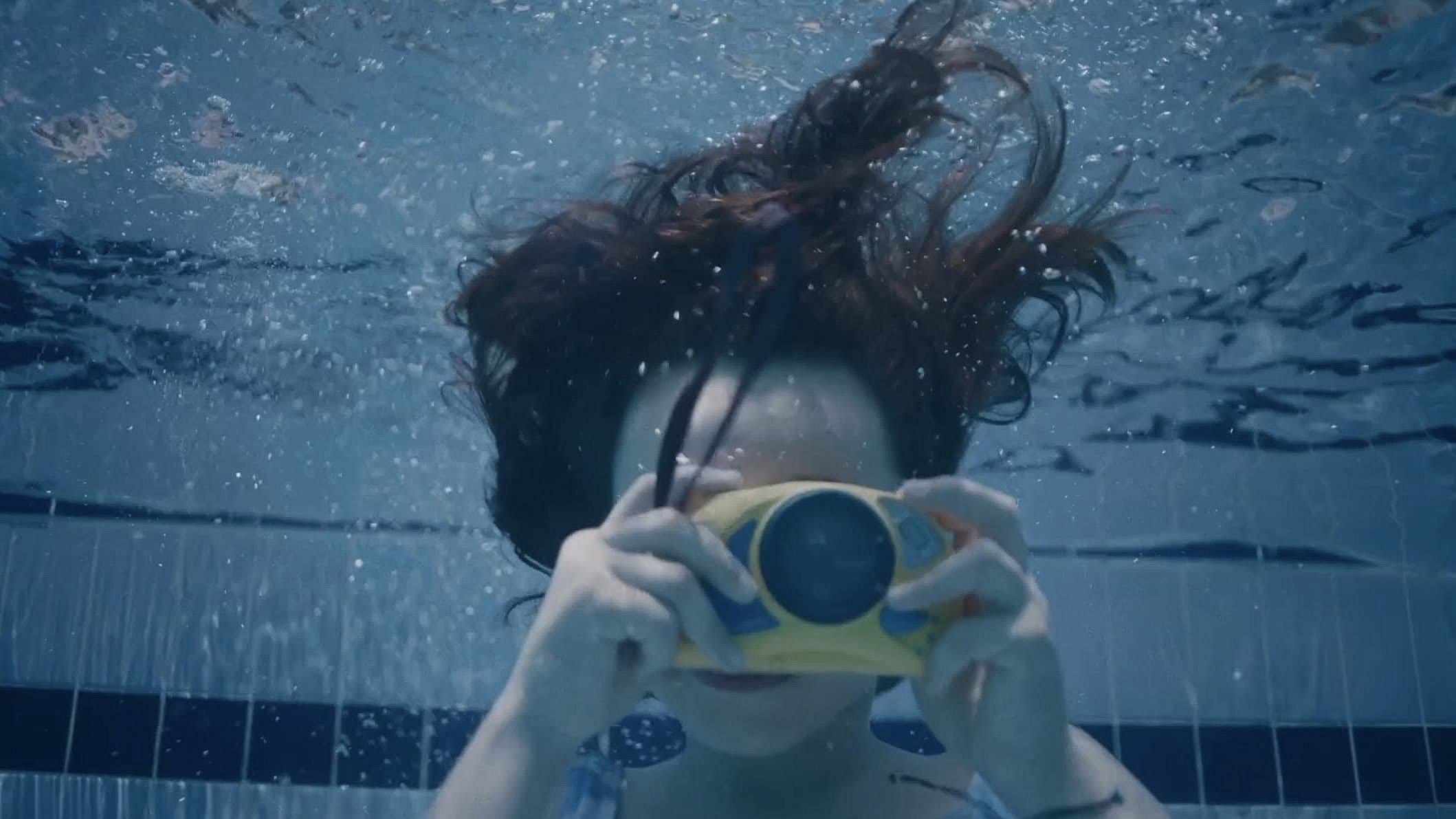
This article contains spoilers for Aftersun and The Holdovers. Additionally, if you have sensitivities related to flashing lights, use extreme caution in watching the videos included throughout the article.
In June of this year, I spent my third consecutive Father’s Day in a state of sorrow and mourning—the same state I was in on my father’s fiftieth birthday, one that he spent on the streets, presumably alone, with either no desire or no means of contacting me, and one wherein I called my grandparents while on the clock to try and make some sense of everything. While the accompaniment of my grandparents, as well as that of my coworker, who lost his father to a long battle with alcoholism before he turned thirty, all helped to some degree, the written explanation of how lonely and altogether complicated these sorts of situations can be may not be required. Nobody, not me or anybody reading this, should traverse the world with a deceased or even merely absent parent. It has never done anybody any good, to put things in the simplest and most obvious terms.
When I discovered that my father had relapsed after eight years of sobriety, I had gone over to my aforementioned grandparents’ house for Christmas dinner. Outside of the fact that I had been given an expected arrival time that was long after every other attendee had finished eating, and that the present I gave a family member, a special edition vinyl copy of Frank Sinatra’s 1970 album Watertown, was met with an immediate reaction of “what am I going to do with this?”, things were clearly awry from the beginning. Everybody in the house was exhausted, suspiciously quiet, and all clearly hiding some sort of secret. In response to my asking where my father was, the only response my grandmother had was that he had a migraine and was driving around the city in hopes of getting rid of it. I would later learn, of course, that this was a bald-faced lie, and that my father had not only relapsed earlier in the year, but had been once again kicked out of their house shortly after Thanksgiving. I, luckily, was able to get ahold of him while he was still staying at a motel a mile away from my house, still had a car and a phone, and was still willing to meet me for lunch on a handful of occasions. As we all know, though, this state of being would not last for much longer.
My previous essay just barely dived into the forgiveness I now hold with regard to the people who, as I put it, ruined my life, and similarly, though I was furious about everything that transpired at that Christmas dinner, I cannot blame any of my family members for how they acted that night. I certainly wish that any of them had told me the truth about what happened with my father, but I also understand that this is not the sort of conversation you may want to have at a holiday party, even one that had long winded down. It was a sore subject for everybody—certainly my father’s older sister, who I would end up holding in my arms as she cried about his relapse—and though I can’t say for certain what the true reason was behind their hiding the truth from me, my father’s oldest child…but I understand to whatever extent I can. I would later, as also mentioned in my previous essay, make up with my grandparents thanks to our respective attempts to knock some sense into their son, I have gone to their house every Christmas since and received far better results, and I now call my grandfather once a week merely to check in, which is far more contact than I could have laid claim to at any point in the previous decade. For all of the interpersonal strife that led to the last few years, one thing you can say about it is that it’s returned our relationship to a more normal, loving state than I could have previously imagined.
One such call occurred on Tuesday, June 17th, where instead of me reaching out to my grandfather after I clocked off on the last day of my workweek, he called me with an hour left of my shift. As had practically been true for every conversation I conducted with my coworker since Father’s Day, we had been discussing the grief and complex emotions we were both experiencing regarding our difficult, largely similar histories with our respective fathers when I received the call and excused myself to take it. After a set of somewhat dispassionate, normal opening remarks (this has proven to be my grandfather’s brand, and I say this with love), he dropped the bombshell on me for which I had been waiting for two and a half years. In an instant, all of my wildest dreams, ones that I never thought would see the light of day, came true.
“Stevie, your dad came home today.”
From the time that I got off the phone to the point where I arrived at my grandparents’ home, I could barely feel my feet touching the ground. I remember barely holding back tears as I left the room to tell my coworker the good news, then talking to my closing manager to ask if I could leave early, then talking to my best friend on the phone as I made the twenty-minute drive, but all only barely. The first clear memory I have of this night following the ending of that faithful phone call, was pulling up to see my father and grandparents sitting on rocking chairs on the back porch, running through the sprinklers watering the lawn as though I was in a cheesy eighties film, and wrapping my drug-skinny father in an intense hug for several minutes straight, crying into the nape of his neck, and expressing emotions of “I’m so glad you’re home” and “you’re so stupid for leaving in the first place” in equal parts. Though I don’t remember anything that my father said, if he said anything at all, I will never forget the sentiment that my grandfather gave to my father as I all but crushed him in my grasp, as though terrified he would slip away again if I ever let him go. “They sure love you.”
My father was visibly and sonically exhausted when I got the chance to sit down with him (which…you know, fair enough), so as he dozed in and out of sleep, I was mostly left talking to my grandparents. I wished even then that my father would have more to say after going no-contact with me for two years, but like his own father, he’s both a man of few words and few clear emotions. It was enough, anyway, to see him again, to hold him in my arms, and to know that he was once again safe and warm, even if I could only speculate how long this would all last. Because he had acquired a phone through some sort of service to help the homeless, I was able to get his new number and tell him that I would check in as regularly as I had been with my grandfather. I was able to get a photograph with him that was enough to show how much he had shrunken since the last time I saw him. And even though he said at one point in the night, semi-flippantly, that “[he] know[s] how [I am]—[I’m] overly sensitive,” in that moment, I didn’t have it in me to come back down to earth.
When I arrived home after my reunion, I had a conversation with my mother where she seemed less than impressed with the news of my dad’s entrance back into my life, and less than eager to humor my overwhelming joy. Shortly afterward, in an attempt to compile my thoughts after a whirlwind of an evening, I went into my room and let every last wave wash over me as they would. And in that moment, I realized that I didn’t feel anything.
A funny thing I’ve noticed about great cinema, specifically the films that would eventually rank among anyone’s respective personal favorites, is that you often don’t know them when you see them. Using my all-time top twenty-five as a sample, I see seventeen films that required at least one rewatch to cement their spots and perfect ratings. Some such films only needed an extra half-star to reach this feat, such as All About Eve and The Silence of the Lambs, while some were called sevens upon my first viewing and had to climb even further on their ways to the top. Even West Side Story, a film I enjoyed enough to warrant a dedicated review in one of the earlier essays I’ve written for Deep Sea Suitcase, received a middling five-out-of-ten score and only fully clicked for me upon the death of Stephen Sondheim in 2021.
This is all to say that, upon my initial viewing of Scottish director Charlotte Wells’s debut feature film, Aftersun, released just about three years prior to my writing this, it didn’t immediately set in that I had just watched one of the finest and most important films ever made. This is not to say that I failed to see any appeal in it, awarding it a strong four stars out of five, but seeing as the film was immediately lauded as the best of the year by multiple film publications, including arguably the most important of them all, Sight and Sound, enjoying it even as much as I did always made me feel as though I was underselling it. Aftersun was clearly an emotional masterpiece led by two of the best performances of that year, and it evidently meant a great deal to many people, most of all the film’s writer and director, but for some reason or another—if my initial Letterboxd review is to be taken as gospel, my immediate objection to the film was that I only wish I knew more about the primary characters than I felt Wells was allowing me—I could only connect with the film so much after one viewing.
As for what changed between my initial viewing and my third one, which occurred several months later in April of 2023, I have a handful of theories that are proving somewhat difficult to willingly put into words. To say that I required several viewings to fully understand the inner components of a, frankly, simple-feeling film, makes me feel, to a certain extent, media illiterate. One could argue that certain aspects of the film feel esoteric and unwilling to spoon feed its text or its subtext—consider, for example, a comment left on my initial review of Aftersun that suggested I would only enjoy it more and more upon futher rewatches1—but on the scale from, say, David Lynch to Noah Baumbach, the distressingly candid depictions of raw human emotions found in the latter’s work is the far more obvious comparison. My other thought, one that I was similarly unwilling to confront, was that Aftersun could only fully unlock for me once Wells’s inspiration that inspired the fiction of the film reflected itself in my own life, which would mean both that I had created a grotesque sort of fan club for the film, and that my father’s relapse and the emotional toll it took on me would end up being worth it. Unfortunately, there is a part of me that believes both of these must be true to some extent.
To say that Aftersun has a plot, though technically and definitionally correct, feels both like an overstatement and like we’re missing the point of the film. In essence, the film follows a Scottish father and daughter pairing going on a vacation in Turkey, and while we see a seemingly linear narrative of various things that happen to them, it’s made clear that the film’s framing device centers around a grown version of the daughter, Sophie, watching home videos of said vacation. Understanding Aftersun as the most literal, straightforward version of itself, this vague plot description is all of what encompasses the film. Brought to life by Paul Mescal and Frankie Corio, two actors who I anticipate will become Academy Award winners in the near future, Aftersun, more than almost any other film I’ve seen, has its scenes pass by like grains of sand in an hourglass. The characters barely grow throughout the course of the film, and for the most part, it’s unclear as to whether anything of note is happening at all. Like the work of Noah Baumbach, to tie it back to that earlier comparison (though there are certainly many other writers who I assume inspired the film), Aftersun is less interested in creating a satisfying narrative than it is letting two beautiful characters feel the world revolving around them and trying to make some sense of it. Aftersun is a movie about people, above all else—real people, the likes of which you and I may know…which is unquestionably by design.
To the extent that Aftersun is a film that blossoms in silence, it’s worth noting how much of the film lives in its subtext. It is, of course, not only a film about a vacation shared between father and daughter, nor is it just about the sorts of small moments one might be confronted with in the setting. To unlock what Charlotte Wells is actually trying to get across to audiences, one must question the significance of the very smallest moments in the film. Why, now, has the adult version of Sophie become drawn to home movies of her and her father? Why is Calum, Paul Mescal’s character, portrayed as physically and emotionally exhausted throughout the film? What sorts of things is he hiding from Sophie, and why does he feel the need to do so? What are the rare atmospheres where Calum feels safe to express his true self? What is it that tears marriages apart? Most importantly, what does any of this symbolize within the narrative that Wells is attempting to spin? Are we meant to understand any of it, or are we meant to create our own interpretations of the project in fear of being left behind in the dust—in other words, is there something Lynchian to this after all?
If anybody out there registers my comment about “not feeling anything” regarding the return of my father as being selfish and awful, you can rest assured that I feel the same way about it.
For two and a half years, one of the emotions that I felt the most was the wish that my father would come home, kick his addictions, and find himself safe and happy again. I recognized it was a tall order, but he had done it before; around Thanksgiving of 2014, after he had been a homeless addict for practically my entire life leading up to that, I found out that he had gotten sober and was now back staying in the basement of his parents’ house. At the same time, as I’ve mentioned in previous articles, my hope that I would one day get to see him again was far overshadowed by the fear that his habits would kill him before I could have the chance to reconnect with him. Regardless, I did have both of these potential outcomes weighing on my mind, so the fact that the happier option wound up coming true should have meant the entire world to me. I had reached the happy ending of the story of my father’s fight with addiction and the turmoil I was forced to feel with regard to it. To feel numbness about his return was not only, as I’ve established, selfish, but completely illogical.
As I found myself battling the surprise side effects of the situation, I grew hesitant to mention it to anybody. To talk to anybody whom I called in excitement over my father’s return and take all of that adrenaline back felt like one of the most insane moves imaginable. For that matter, I certainly couldn’t mention it to my coworker, who already knew what it was like to lose your father forever, with no chance of getting him back. There was no universe in which confiding in him about my new set of complex emotions was anything less than absolutely tasteless—one of the worst things I could ever do—but, at the end of the day, I couldn’t help myself. I cannot remember with any amount of certainty how he responded, and thus I don’t wish to put words in his mouth, but I knew how the situation felt to me. I was given the chance to see my father again, leave us on a better note than when I spat venom at him as I drove him to his parents’ house at one in the morning, and give the two of us the space to regrow our relationship for as long as we were in each others’ lives, and here I was not a week later…moaning about it.
Here’s the thing, though: for all of the happy tears I had shed upon seeing and hugging him again, and for all of the euphoria I felt about his newfound potential, an emotion I felt just as strongly was fury. This is not only to explain my vocalizing to my father that he was stupid for what he did—though there was plenty of that—but also something far deeper sparked by his nonchalance throughout the whole night. As I poured my heart out while talking to him, to have him drifting in and out of sleep and dismissing my words as coming from someone so generally emotional felt, for lack of a better word, entirely condescending. I had waited all this time to receive a second chance with him, and he was responding like it had been a week since the last time he saw me. For that matter, as my anger towards that situation snowballed throughout the night, I was struck by another thought: who was this man to come back into my life after so many years, so much grief caused by his actions, and so many sleepless nights and grueling slogs of days? When I decided that I might never see him again, I went through my entire mourning process. I comforted the other family members that he had let down by getting back into his old habits. I made peace with the fact that things might never be the same again…and here he was, coming back into my life as though nothing had happened. Forget who I must think I am for being mad about his re-arrival, who did he think he was for putting everybody through that and expecting a warm welcome back?
In October of 2023, director Alexander Payne broke a six-year hiatus (sparked by the release of his disasterpiece Downsizing) to release one of the best films of the decade so far. The Holdovers, a pseudo-Christmas film, primarily follows a curmudgeonly older man (played by Paul Giamatti) who is forced to take care of one of the students at the school he works at (newcomer Dominic Sessa in one of the finest performances in recent memory) over the holiday break, due to the fact that the student, Angus, doesn’t have a decent home to return to. The film, like many I’ve gone on record as loving, is one about a group of troubled people barreling through their damaged souls and using forced proximity as a way toward community and inner growth. Second only to Election as Alexander Payne’s greatest film (and it’s a tight race), The Holdovers is similar to Aftersun as being a modern masterpiece that probably should have received many more Academy Awards than it did. Had Oppenheimer not been the atomic bomb it was during award season, it may very well have2.
Most important to this conversation is what I would call the best scene in a project full of outstanding ones, wherein Sessa’s character reunites with his father. After insisting to Giamatti’s character that Sessa’s father was dead, he breaks away from his professor’s grip to, presumably, visit his father’s grave. Upon Giamatti finding him and, in his annoyance, agreeing to take Angus to his father’s grave, a long cross-fade takes us to the mental hospital where Angus’s father is actually being held. When Angus finally arranges the chance to have a conversation with his father, the boy first gives him a long hug to the tune of his father’s distant stare, and then describes all of the things that a father should be proud to hear of his troubled child; Angus has been keeping his grades up, he’s been smoothing out his emotions, he’s been taking part in extra-curricular activities. Then, after Sessa’s monologue wherein he catches his father up on everything he’s missed, he receives a heartbreaking response that tells him that the man he once loved can no longer respond in kind. “Listen, I have to tell you something,” Angus’s father says. “I think they’re putting something in my food.”
Though the tide has been changing on this somewhat, it’s fair to say that I don’t often cry at movies, particularly not in a pre-2023 landscape. Despite this, I have always found it impossible to watch or even discuss this Holdovers scene without breaking down and wallowing in my sadness. At a certain time, the scene made me emotional just because it showed an astoundingly acted standoff between a troubled teenager and his estranged father (same, girl), but as one may imagine, I now cry at the scene for a separate reason. It has become increasingly evident that to be without my father is one thing, but to be with him, to care for him, and receive nothing but cold responses is something else entirely. For all of the guilt I have with regard to how I reacted upon my father’s return, I can safely say that this situation is one where you can only know how you’d react when it happens. I’m only grateful that I’ve been gifted with art that can help me through it.
It was at this point in the writing process that I watched Aftersun for the sixth time, for the sake of taking notes, and…I’ll tell you what, it does not get easier.
In the time since my father’s drug relapse, I was allowed the time to experience several different emotions, navigate my own grief, and watch Aftersun over and over again as a coping mechanism. The feeling of anger regarding my father’s choices only truly set in once he made his grand return into my life—a feeling I hadn’t felt the first time he got sober, primarily because both he and I were different people in 2014 than we are in 2025. Perhaps I should have felt betrayed when he relapsed, but my primary emotion throughout the whole experience, outside of grief, was sadness for him. It wasn’t his fault that he got hooked on drugs again; it was the fact that the painkillers meant to help his COVID symptoms weren’t strong enough and only fed his desires for stronger substances. Drug addiction is an illness, after all, and it’s one that affects the person just as much as it affects the people around them. I knew that at the time, and I suppose there’s a part of me that still knows that today, but I also have insight into the man now that I didn’t have then. There was a time where I saw him as some great tragic hero, and that’s just not accurate.
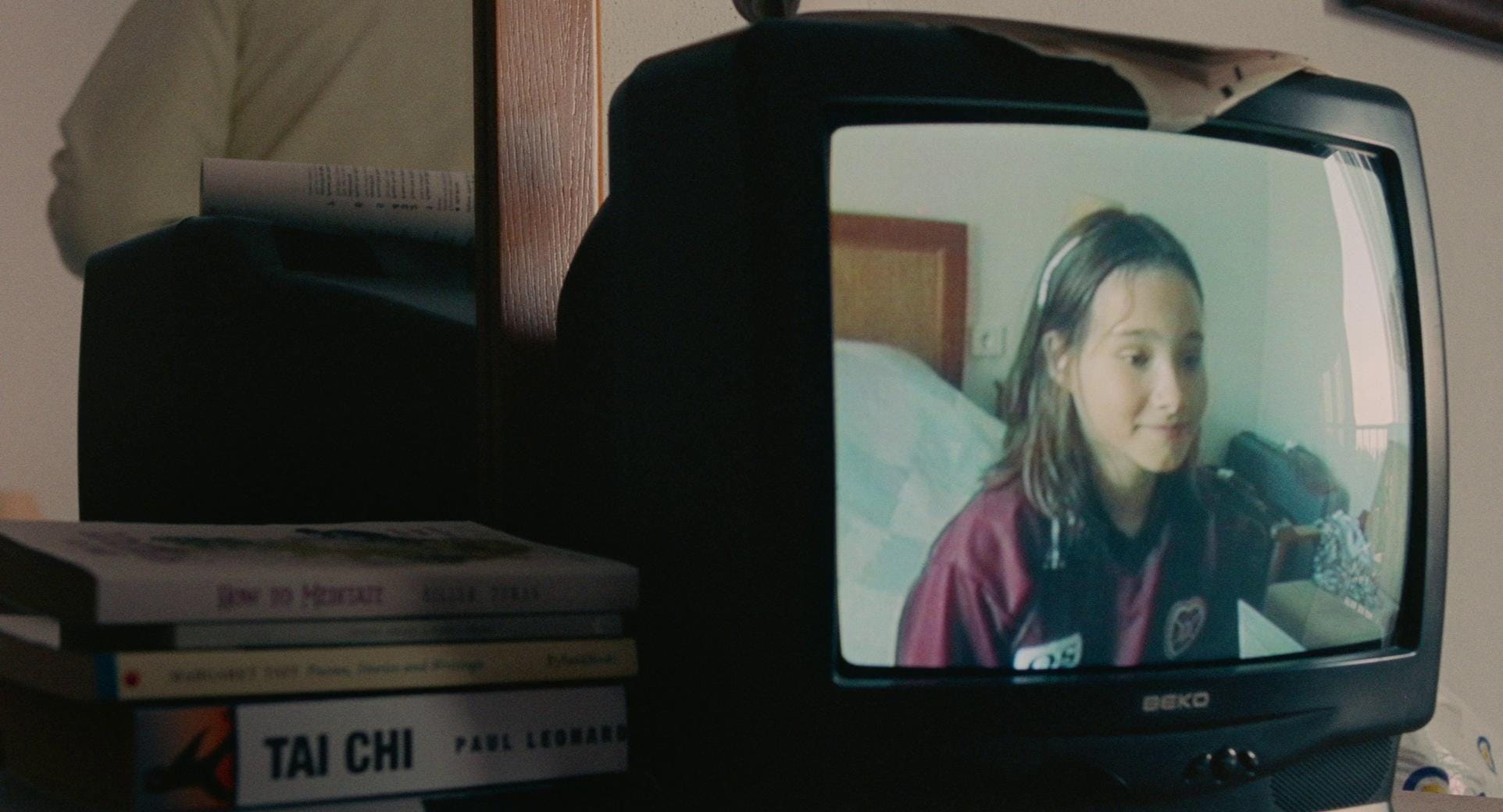
One of the more specific things that separates the story of me and my father from that of Sophie and Calum is that he wasn’t around at all when I was little, after he showed complete disinterest in me following my birth and, a few years into his marriage with my mother, cheated on her with a minor. Two of the only clear memories I have of my dad through the first fourteen years of my life were bringing him Thanksgiving leftovers while he was living in the parking lot of the print shop he was working at, and picking him up from the homeless shelter to get a meal, seeing cocaine smeared across his black hoodie. There is, of course, some great tragedy to be found in this scenario, but one of the things that makes Aftersun so devastating is the spectacular bond that the two central characters have with one another. Even after Calum has separated from Sophie’s mother and now lives in a different part of the world, the pair are two peas in a pod, at least in the span of their vacation. They crack jokes with one another that border on negging, but are always understood as being made out of love. In one of the videos Sophie records on her dad’s camcorder throughout the film, she introduces him as “wonderful, marvelous, and amazing.” When Calum finds out that the hotel accidentally booked the two a room with only one bed, he understands implicitly that he should sleep on the ground. Even in the short moments where the two bicker, it’s never so horrible that it can’t be resolved too quickly.
And yes, this is a beautiful dynamic for two fictional characters to have, but there’s a some reality implanted into the writing as well. This includes, of course, the fact that Aftersun was written as a mostly autobiographical piece by Charlotte Wells, seemingly as a way for her to process her own grief, but also that, more than most characters I can think of, Calum and Sophie, particularly the latter, feel raw and lived in. We don’t get as much insight into Calum’s inner mind, as Sophie is the point-of-view character, but we’re certainly aware that he has something deeper going on in his life and in his head than he is willing to share with his daughter. Sophie, in the kindest way I can put it, acts like a real child. She is written like a real child, and Frankie Corio portrays her brilliantly. There’s something of a childlike innocence to her, in the way that she is interested in paragliding and applying sunscreen to her own back even though some part of her must know she can’t, and in the way that she must see her dad as a god on some level, but this is contrasted with the fact that she knows something is wrong with her father, she knows he’s suffering, but she doesn’t and can’t know what to do about it.
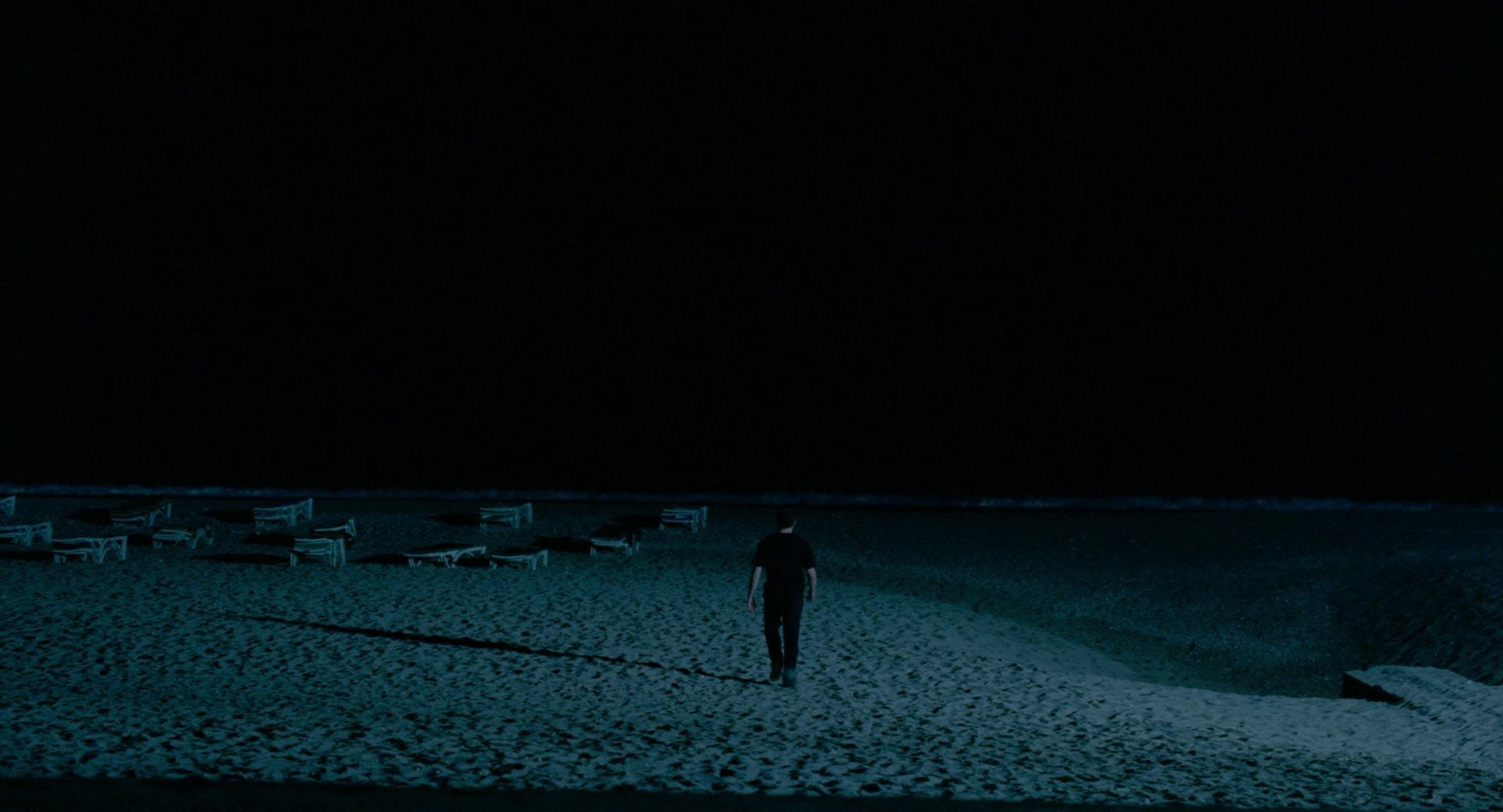
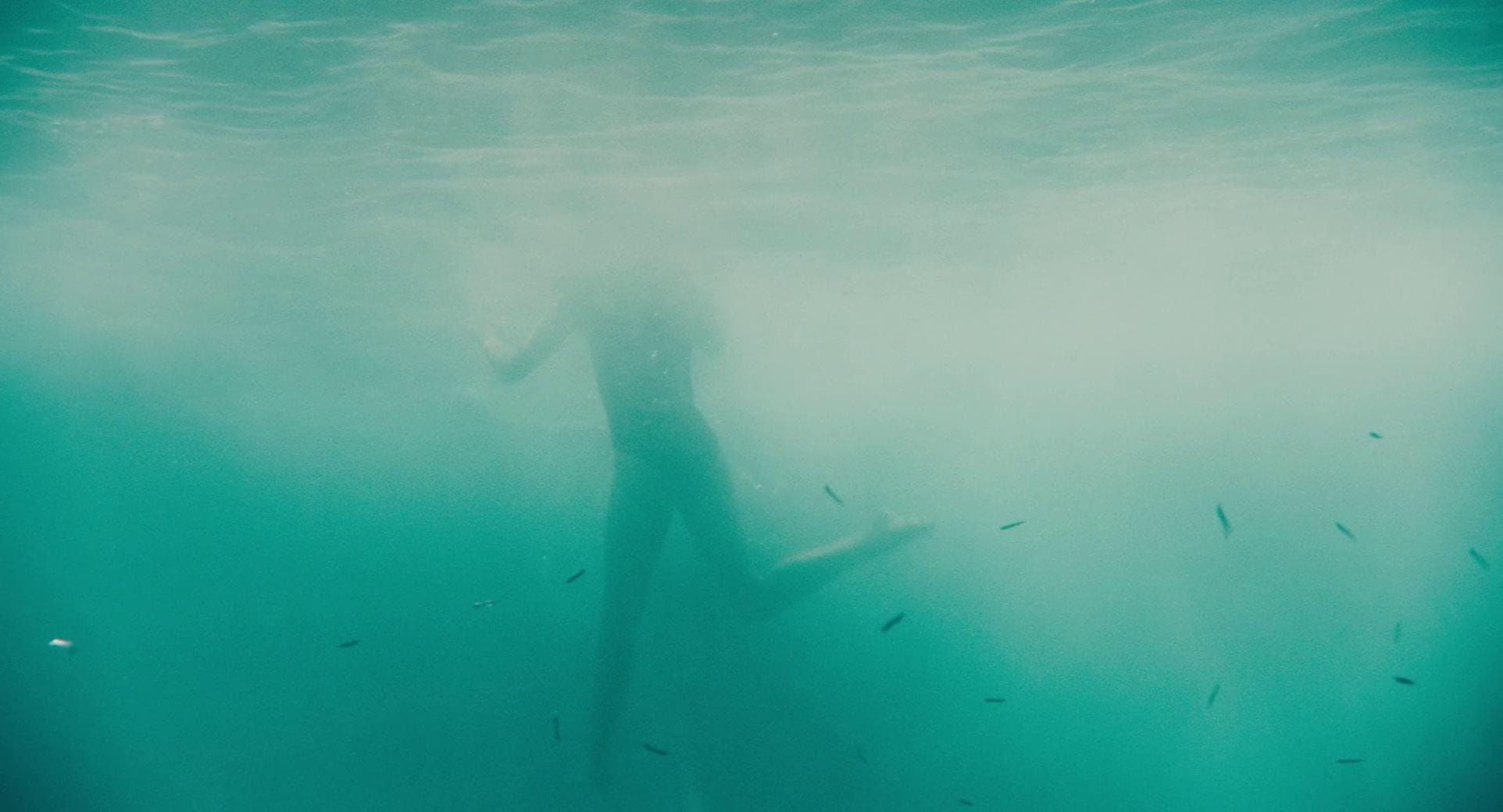
As mentioned earlier, almost all of what Aftersun is actually about lies in the subtext and the smaller moments. The most prominent theory I’ve heard about the film is that, following the end of his and Sophie’s vacation, Calum commits suicide. If this has been confirmed in any capacity, I have not seen or heard it, but it sure seems like Aftersun is pointing in that direction. There are, for example, short shots that show Calum practicing Tai Chi on the railing of the balcony in a way that looks like he’s about to jump, or ones that show Calum running across the beach, at night, directly into the ocean. One must also ponder why Sophie is in possession of the tapes from her father’s camcorder, and why she finds herself returning to them, solemn and alone, as her own child gurgles in the next room over. The only concrete piece of evidence that leads to this being the outcome is that, near the end, Calum is seen crying while sitting in bed as a postcard written to Sophie, reading something like a suicide note (“I love you very much. Never forget that. Dad.”), sits nearby, and even that is fairly vague. Really, it’s through combining all of Aftersun’s small moments that we are able to draw anything of a conclusion from what it’s saying. All we know through the framing device is that Sophie’s father has disappeared from her life through some means, and that she needs to rely on home videos to feel connected to him and figure out where things went wrong.
This is to say that, above most other things, Aftersun is a film about memories, particularly in the sense that Sophie, as with everybody, is something of an untrustworthy narrator. Following this reading of the film, as Sophie watches the videos she took during her vacation in Turkey—only three or four of them, and if she has more, they’re not shown—she only has a handful of data points to sift through before she herself must fill in the gaps. Sophie only concretely knows a few fleeting moments from the vacation, like how, when her younger self attempts to “interview” her father and ask him what he thought he’d be doing at the age he is now, he pauses for a long while before telling his daughter to turn off the video. These are the little moments that must make the adult version of Sophie reframe their entire Turkey vacation. The long pauses that Calum would often take when Sophie asked a difficult question. His attempts to make Sophie smile and laugh when he must know, deep down, that this would be his last chance. Everything Calum said and did to make sure that Sophie would be okay in the future—giving her challenging books to read, encouraging her to hang out with slightly older girls, and asking her if the word on the street regarding her future grade school teacher is decent. Many of these things are expected in a caring father, but what does it mean within the world of Aftersun? After all, when partaking in an activity like the adult version of Sophie is doing in the film, doesn’t every last second count?
The majority of the events that occur in Aftersun feel rooted in reality, but one has to assume that parts of it are not. In the scene where Sophie and Calum talk about the difficult book while Calum attempts to remove his cast after “falling3,” Sophie is bathed in the warm light of the bedroom, while Calum’s environment is the cold, blue bathroom. It probably goes without saying that this is an extremely classic form of visual storytelling, one that easily, quickly explains both characters’ emotional states, but are we supposed to understand that as having actually happened or how adult Sophie remembers it? What does it mean when, in the final shot of the film, Calum walks through a door in a Turkish airport and instantly enters a rave that we had seen occasionally throughout the film (and we will GET to the rave)? For that matter, are the scenes where Calum walks into the ocean or tells a diving instructor that he doesn’t picture himself living to forty meant to be literal? It’s definitely possible, but I feel that reading Aftersun in that way misses the point to some extent. I feel that any amount of Aftersun not actually having taken place is part of the beauty and sadness of it all—memories are fleeting, after all, and the fact that some of Sophie’s understanding of the vacation is plagued with some of her jokes clearly going too far, the fact that Calum accidentally locked her out of their hotel room for the night which shows his daughter that he’s not perfect, and talks about Cleopatra’s suicide by snake bite, is, in a way, even more crushing than if we were to understand how much of it is potentially literal.
In this way and many others, Aftersun stands as one of the most effective depictions of what it’s like to be human and to mourn that I’ve ever seen—maybe the most effective. That Calum wants to be a decent father despite his divorce from Sophie’s mother, his mental state throughout the trip, and his plans for the immediate future, not only makes him a strong, multi-faceted character, but also one that can only come from somebody real, or at least somebody real as they’re remembered and immortalized several decades on. I can’t confirm much about the specifics of Charlotte Wells’s relationship with her father other than what the Internet tells me—that, yes, her parents were divorced, that her father died when Wells was a teenager, and that she remembers him as an involved and loving parent—but it is enough to understand how many of her personal experiences made it into her debut feature film4. However much Aftersun appeals to me directly, as a person who has also spent much of their adult life trying to make sense of their relationship with their own father, one can only imagine how much of a labor of love and therapeutic power it must have been for Wells itself. Even if the film makes me feel emotions that I would rather pack away, and even if that mostly makes me want to throw hands with Wells if I ever get the chance to meet her, I will, at the same time, forever have to admire her remarkable creative hand and the fact that she made a film which I certainly needed at the time and will most likely continue needing for the rest of my life.
I’ve had three years to mull over this observation, and I think I’m finally ready to call Aftersun the new gold standard for cinema. As you’ll see if you peek at my top one hundred list of favorite movies, though there are some movies I prefer to Aftersun, there truly aren’t that many. Though I always had a fondness for movies, I was sixteen years old when I decided I really, fully loved them, and that I would eventually aim for a bachelor’s degree in film studies (was that a bad idea? Am I going to use this degree to have a long and fruitful career? We are yet to find out!). In the time since then, no new release that I’ve seen has met or surpassed the perceived quality of Aftersun. It is because of the degree to which it hits close to home, yes, but I also feel as though it’s exquisitely made. One may surmise from this essay so far that I think Mescal and Corio are almost unparalleled in their crafts, and that the pairing of Wells’s directing and writing jobs make for one of the strongest combinations ever gifted to a wide audience, but I’ve failed to even touch on the gorgeous cinematography from Gregory Oak (just look at some of the screencaps I’ve placed throughout this essay), Blair McClendon’s powerful use of editing that you’ll just have to see for yourself, and even the specific songs Wells chooses to include throughout the film. Not only does it all feel so deliberate, but almost all of it borders on genius. It is the kind of film that all other filmmakers will have to attempt to match in the future. I won’t stand for anything less.
When it came time to call my grandfather the week after my dad’s return, there was a large part of me that didn’t want to do it. It was, after all, one thing to feel such conflicting emotions about what had happened the week prior, and another thing to dump it onto my coworker whose father had long since passed, but it was a whole new thing to face my grandfather about it all. This was a time of joy, after all. After leaving my grandparents’ house the Tuesday prior, I had woken up my great-aunt with a phone call to tell her the news. The following day, when I went to dinner at a Chinese buffet, I ran into a somewhat distant cousin on my dad’s side and told her the news as well, even in a time when I had mostly gotten past the honeymoon period and was unsure how happy I actually was about it. Was I then supposed to go to these family members and discuss my complex feelings? Not only would this have been a foolish thing to do after expressing my joy, not only would it be an admission of defeat, but also it would have been disgraceful towards everybody who was happier about my father’s return than I was.
I did end up calling my grandfather, a tradition I had started doing partially for fear of regretting reaching out once it was too late, and one that I would do immediately after leaving work and, usually, before even leaving the parking lot. Though my memory, like that of most people, is faulty, one can assume that I had just been talking to my frequently mentioned coworker about my woes which, again, is not something I’m particularly proud of, and was most likely putting me in a negative headspace as far as getting ready to confront my emotions head on with one of the people who knows my father the best and cares about him the most. As my grandfather picked up the phone, I still found myself preparing to face the reality of the situation as we started the smalltalk that usually opens our conversations. Thankfully, I was not the person who had to turn the conversation to being about my dad—it was my grandfather who had to tell me that, only a day or two after I had my second chance to reconnect with him, and during a long week of being forced to stew over my emotions, my father had left the house. Again.
Granted, this wasn’t completely my father’s doing, as one or both of my grandparents were seemingly exhausted by having to constantly take care of him and pretend that his ways of life were normal (which, you know, is also fair), and instead drove him down to a halfway home with his fully working cellphone and, if my memory serves me right, some amount of money, and told him to call when he was settled. My grandparents never did receive that phone call and, in fact, every time they would attempt to call his new cell phone, it would go directly to voicemail. Once again, he had used his immediate family members for a brief respite only to immediately turn his back on them, leaving the people who love him most in the world to feel their hearts being ripped out of their chests yet again. As for me specifically, I had been left with my worries and overall distress being proven completely warranted; similarly, when I ran back into work to tell my coworker, in a fit of complete emotional wreckage, the horrible truth, his immediate response, interpreting the information at the same rate I was, was “now I see why you were so conflicted about it.” This was the last thing I remember hearing before my thoughts and anxiety completely overtook me, leading me into what I can only describe as some kind of blackout.
What is one meant to do when faced with dilemmas like this? Admittedly, this is the kind of situation that I hope nobody has to deal with ever again, but in a way, having a roadmap to navigate said situation might have made a large difference, especially because, as I am writing this three months later, I remain unsure of how to carve a path forward. With respect and love to the people in my life and their interest in helping me through the issues that life has presented to me, I know that some part of them is aware that I should have known this was coming. I should have known, based on everything my dad had ever done throughout my entire life, that he would betray me again, and that I shouldn’t have gotten my hopes up in the first place. I was told by multiple people, not just my coworker, that part of them expected my father to leave based on how I had described him in the past, and had some hesitation about congratulating me and otherwise being happy for me in good conscience. I’m uncertain of how I was meant to interpret the fact that so many people had this same reaction, but I knew that it only served to make me feel even worse. Not because these people were wrong to feel this way, but because they were right and I couldn’t see it. What kind of idiot was I?
In the time since the second coming and betrayal of my father, I have taken some steps in understanding my grief and moving forward. For example, I have put great thought into whether my irreconcilable emotions did anything to accidentally manifest my father leaving, which only stood to compound the stress I felt. I lied several times to my grandfather about having tried to call my dad during a time when I still felt too much anger and betrayal to do so. I found some solace in one of my favorite Taylor Swift lyrics, “help, I’m still at the restaurant, still sitting in the corner I haunt,” a sentiment I have always latched onto upon PTSD relapses over The Incident and could now attach to a whole new piece of trauma. Finally, I considered reworking a short film I had written in college into a feature-length project that would, in part, tackle this new feeling in a way that my unproduced miniseries did for The Incident.
One thing I did not do between then and now, some of you may be surprised to hear, is decide to write an essay about Aftersun. As a matter of fact, I knew that I wanted to devote an essay to the film, comparing and contrasting it with my complicated history with my father, long before he made his grand return to my life and messed everything up again in one fell swoop5. Still, it’s hard to explain just how much additional insight the situation added both to my essay as a whole and, specifically, my interpretation of the film. When I say both that Aftersun is a film about realizing your parent isn’t a god and the general frailties of our memories, it is also to say that, no matter how much damage your parents put you through, and no matter how damaged they themselves are, it’s common to continue latching onto the hope that they are gods, or, at the very least, good people at their cores.
The relationship between Sophie and her father is so complicated, particularly after his death and her shift into adulthood, and those complications are exactly why she finds herself going back to her home videos and trying to make sense of what her relationship with her father actually was. Frankly, it’s for the same reason that I’ve found myself clinging to Aftersun in the wake of everything that’s happened—Wells must know, to some extent, that you need to hold onto positive memories while also allowing yourself to change with the times. The whole picture is important, but if you don’t allow yourself any fond memories, reverence, or grace regarding complicated people, then you might as well have nothing at all. I may not yet be over what happened to me this last June, and I may still use Aftersun as a life vest and shoulder to cry on, but I also know that understanding the situation from every possible angle and taking comfort where I’m allowed it are the only things I can do in order to avoid being completely swallowed by the sea. I’ll just need to keep swimming upward.
When Aftersun reaches its peak, it is near the end.
At several points throughout the film, Charlotte Wells seemed to be teasing something of a rave sequence, shown through quick glimpses of an older Sophie searching for her father in a set piece that, while the actual area is difficult to see, serves as a nonetheless striking image that is only ever shown through alternating sets of darkness and bright lights. As with most of what Aftersun has to offer, it is not immediately clear what the rave represents—one can even argue that the truth behind the snippets is never brought to light—but in spite of all that, one may be able to draw a handful of conclusions. It is almost certainly another facet of the film that is symbolic rather than literal, as the rave is only ever shown in parts of the film that take place outside of the wider timeline. As we see an adult Sophie trying now to literally find her dad as opposed to finding him through their home movies, one could consider the rave as a kind of afterlife, and/or a place where Calum is finally allowed to feel free and secure in his own skin.
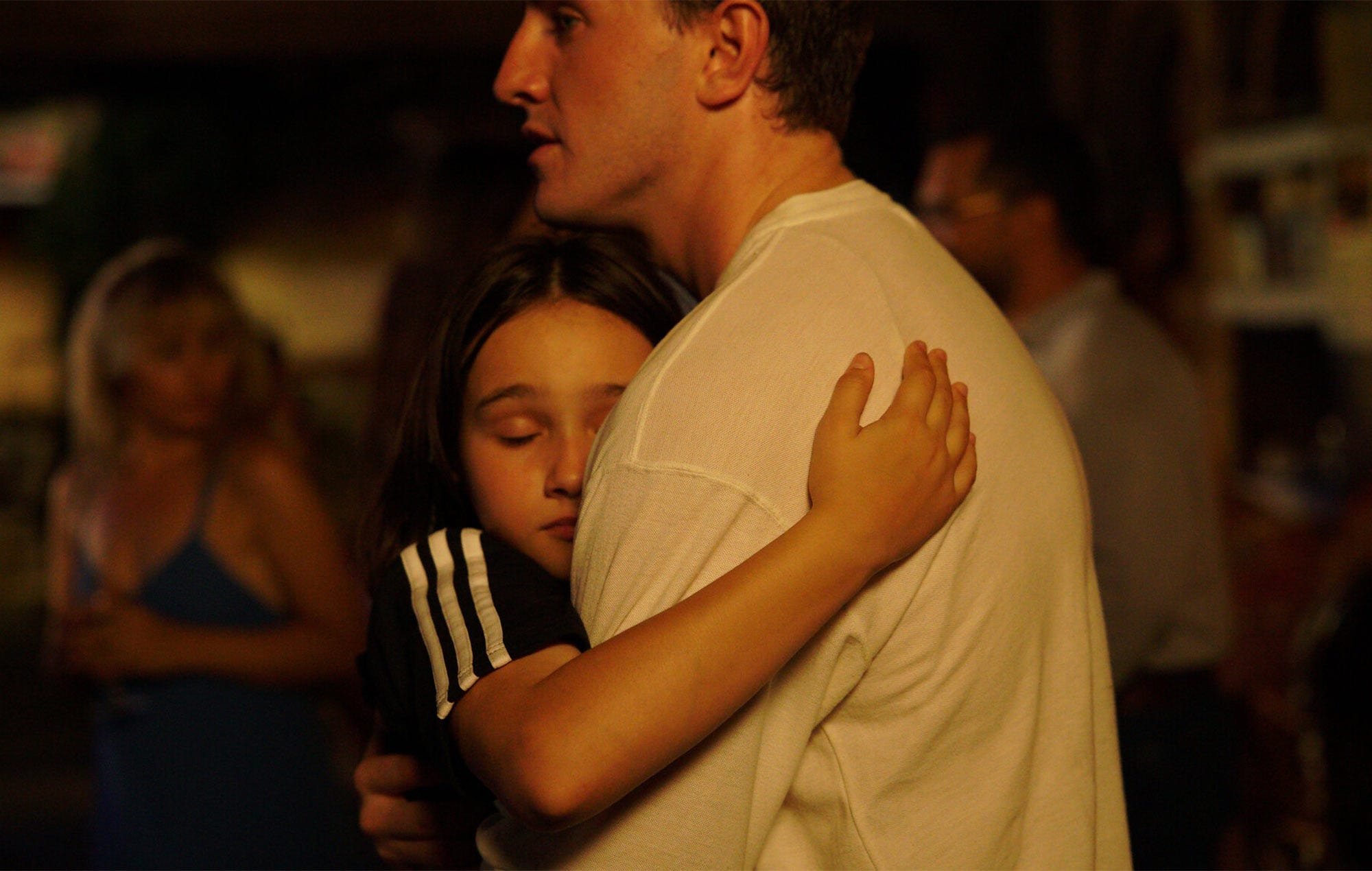
Whatever the rave is meant to represent, we are granted some explanation, some payoff to the planting, in the final ten minutes of the film, beginning after a long shot of a slowly developing Polaroid photo taken of our two main characters. This cuts to Calum and Sophie chasing each other towards a space filled with people conversing and swaying half-interestedly to “Under Pressure” by Queen and David Bowie. To Sophie’s embarrassment, Calum starts dancing, almost full ham, to the song. Calum invites Sophie to join him, and when she responds with “I don’t dance. When have you ever seen me dance?” he says “I’m dancing with or without you. I told you.” After this, shots of a younger Sophie warming up to the idea of joining him, something that ultimately turns into what looks like her slow-dancing with her father and crying into her shoulder, are cross-cut with the final rave sequence in the film. An adult Sophie once again finds herself searching through a crowd of people for her father, and just when she finally seems to grab him, she loses him just as quickly. Calum falls out of Sophie’s grasp, he wears an awful, terrified look on his face as he falls into the abyss, as it were, and the sequence ends.
One essay idea I’ve started kicking around for Deep Sea Suitcase, inspired by a video made by a now-disgraced film critic, is making a listicle of my ten favorite movie moments of all time. All things considered, I doubt I’ll wind up producing that as opposed to something similar and more original, but I feel it’s worth noting that the rave scene in Aftersun probably would have ranked strikingly high. It may not have taken the top spot, as I predict I’ll always have a sort of reverence for the third-act twist in Paul Thomas Anderson’s Magnolia, but that I’m even considering the alternative should tell you most of what you need to know about Aftersun’s finale. There are probably a billion and one things I could say about how immaculately crafted this particular sequence is, including but not limited to, again, the cinematography and editing, which I previously picked out for the specific purpose of praising the scene in question.
The shadow-work that had to have gone into how beautifully Calum and adult Sophie are shrouded in darkness mixed with the frame-perfect cuts back to a younger Sophie unknowingly sharing one of her final moments with her father makes for a combination of visuals that I suspect will never be forgotten by history. The paralinguistic acting at play is also great, but one must specifically point out the use of “Under Pressure” here, which is not only one of the finest cinematic needle drops ever conceived, the instrumentals cutting out after the second chorus so you have no choice to be alone with the lyrics, your emotions, and the crushing weight of the film’s finale, but also institutes an almost Pavlovian effect in me. For the first time, I had almost gotten through the entirety of Aftersun without crying while taking notes for this essay, and then I heard “Under Pressure” begin to play, and I lost all of my strength in that moment. That’s just the power of cinema, baby.
For all of its positive qualities as a sequence in and of itself, the rave scene may not have worked as well as it did if it hadn’t been what followed the ninety minutes of majesty which came before it. I would reckon the sequence would still work tremendously as a short film, but its placement as the climax to a story implicitly about the impermanence of life and the relationships we forge as we experience it serves as the only real sense of true catharsis and praxis that Aftersun ever provides. We are finally actually able to see the extent to which adult Sophie is searching for some semblance of her father, only for her to immediately lose her physical grip of him anyway. In character arc terms (being the difference between external and internal motivations), while Sophie spends such a prolonged period of time trying to find her father in whatever way that might be, what the film’s universe seems to want her to do is let go; understand that memories are, sometimes, meant to be just that—memories—, and that one must eventually move forward with their life rather than wallowing in their grief and attempting to understand and fix the past to an extent that you can’t realistically do. I’m not saying that Aftersun has a happy ending, I’m not saying it’s even remotely happy; I’m just saying that, at a certain point, that’s how things need to be. As Robert Frost put it, nothing gold can stay. The sooner anybody in Sophie’s shoes can accept that, the easier things will become in the long run, even if they can’t see it right now.
In July of 2012, video essayist and science-fiction novelist Lindsay Ellis (then known professionally as the Nostalgia Chick) released a video titled “Lindsay’s Top Eleven Favorite Movies of All Time! (this week).” Though the video has now been removed from YouTube, along with almost everything Ellis released prior to her rebrand, one can still track it down via Internet Archive, and upon my rediscovery of it, I have watched and rewatched it many times in the last few weeks. I plan to, someday soon, elaborate on why this particular video has taken over almost my entire attention span, but for the time being, I will only touch on what element of the piece connects to my current point. As she introduces the film in her number nine spot, The Lord of the Rings: The Fellowship of the Ring, she makes the comment that, while there is no shortage of great films, the sort of film that changes your life, alters the trajectory of your path, or makes such a monumental impact that it transcends the general aspirations of cinema is relatively rare. You can’t expect to have those types of films come around too often.
This is, of course, to say that Aftersun unquestionably rocked my world to an extent that I am a different person from who I was before the film fully clicked for me, particularly because it shifted my view of what one could do through storytelling and the medium of film. It feels disingenuous to say that the way Wells mixed literal, hyper-realistic storytelling with complex symbolism and themes one might only catch if they’re looking for it is something that is unique to her creative eye, but I struggle to recall any film that achieved this feat as well as or better than Aftersun did. In one of the earliest essays I wrote for Deep Sea Suitcase, I mentioned that I followed up an emotionally draining school trip to Las Vegas by watching the film at the head of this piece. This turned out to be a choice that not only helped me grapple with the difficult month I had just had, but also kind of inspired me to write my own Aftersun-lite script, depicting as much as I could remember of the situation. This never came to fruition, mostly because writing a feature-length script times a lot of time and work—not to mention how many people I’d need to get permission from in order to write it—but even if that’s a poor example in hindsight, one of the main reasons I started this Substack was to eventually write about this masterpiece of cinema; the one that basically changed everything for me.
For how many times I’ve seen the film, how much of a positive impact it’s had on my life, and how many awful things it has had to help me through, it’s bizarre to me that Aftersun is only three years old. The film feels like it’s been around for a millennium, like it’s one of those landmark works of art that have shaped the world of cinema in countless, unrequitable ways, but in reality, things are only getting started. I’ve gotten on my soapbox in other pieces about many films feeling the same and taking obvious inspiration from landmark projects, but I am somehow excited about the art that Aftersun may end up ushering in. That art can help the artist and their audience in the way that Aftersun did is part of the entire appeal of creativity, and I feel that it should be the most important reason that we continue making movies—not for cynical financial gain, but for the novelty, power, and technical beauty that films like Aftersun embody. If this film inspires a million independent filmmakers to do something similar, I will be thrilled. I suppose I’d better start working on that screenplay, too.
“I think it’s nice that we share the same sky. […] Well, like, sometimes at playtime, I look up at the sky, and if I can see the sun, then I think that the fact that we can both see the sun, so even though we’re not actually in the same place and we’re not actually together, we kind of are in a way, you know? Like we’re both underneath the same sky, so...kind of together.”
This piece is my own original work. Any direct and unacknowledged similarities to writing from other sources are entirely unintentional.
Next month on Deep Sea Suitcase…NOTHING! I will return with a Best Songs of 2025 list in December, and we will then continue our regularly scheduled program.
Can’t say he didn’t have a point, I guess. When you’re right, you’re right, Paul.
Oppenheimer is…fine. It’s fine. Truly, I have only seen it once, upon its release, and it’s possible that the film will become one of many to grow significantly on me upon rewatch, but I’ve always felt as though the first hour doesn’t have half the power found in the last two. It’s a beautiful acting display all around, and part of me understands the hype it received, but I’m tentatively calling it a seven out of ten.
I hate to put this in the footnotes because it’s such a pivotal moment, but there is a short piece of dialogue some way into the film where Sophie asks “did it hurt when you fell?,” with her father responding with “when I hurt my wrist?” This is one of those moments that is so subtle that I’m not even certain it was intentional, but the implication that Calum didn’t “fall,” or that it wasn’t an accident, ripped my heart into a million pieces the last time I saw it.
This tidbit still amazes me, by the way. Her first-ever full-length film! Most people won’t make a film this impressive in their entire lives, and the writer-director of Aftersun essentially got it in one try (excluding the trashed scripts and early film school projects that she undoubtedly made—I’m aware that films this perfect aren’t made from fairy dust). Eat your heart out, Orson Welles!
This turn of events sure did make for a killer framing device for this essay, though, huh? Maybe some good came out of this situation after all.